SS-31 Research Guide: Mitochondrial-Targeted Peptide
Discover how SS-31 (Elamipretide) targets cardiolipin on the inner mitochondrial membrane to reduce oxidative stress and protect cellular energy production in cutting-edge research.
Research Writer
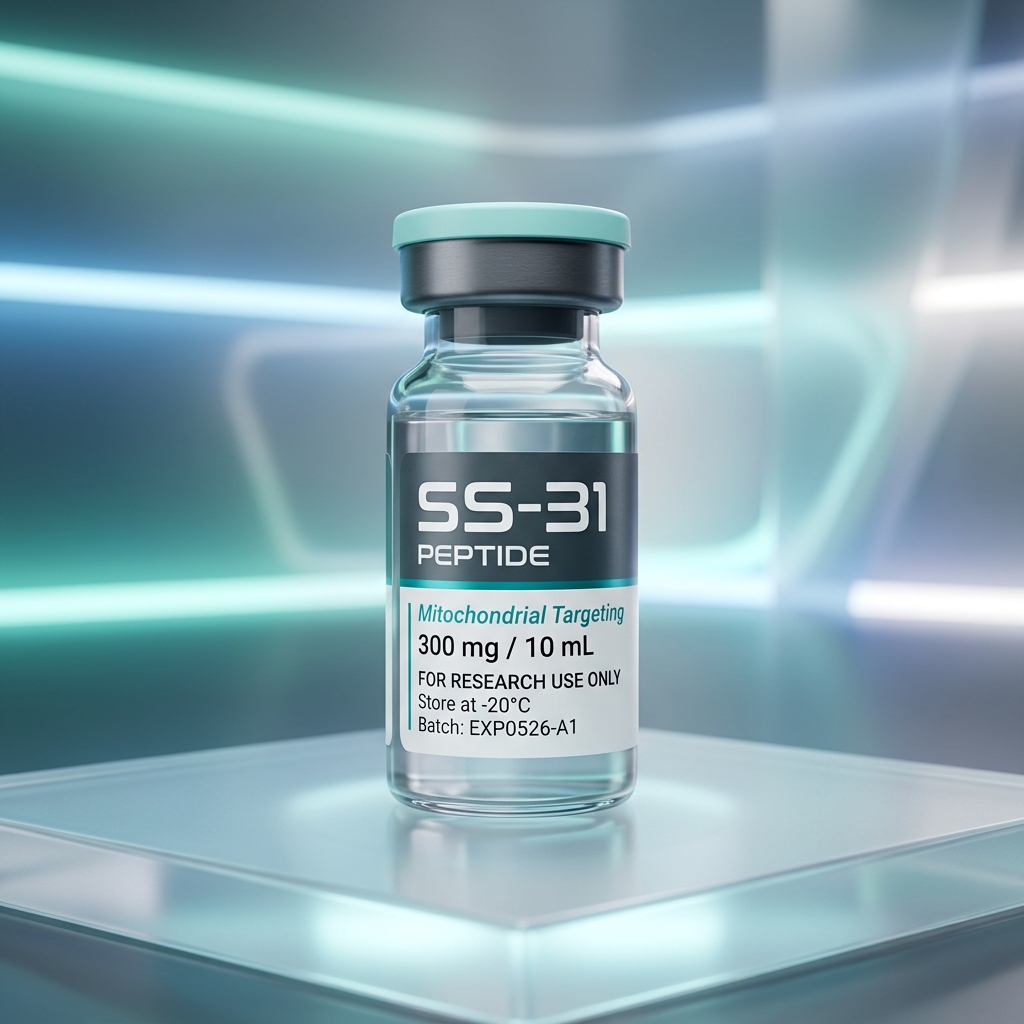
SS-31, also known as Elamipretide, MTP-131, or Bendavia, is a synthetic aromatic-cationic tetrapeptide from the Szeto-Schiller series, designed with a single purpose: targeting the inner mitochondrial membrane. As mitochondrial dysfunction has become a central theme across cardiovascular, renal, and aging research, compounds that act inside the organelle itself rather than in the surrounding cytoplasm have attracted growing scientific interest. SS-31 stands apart from most antioxidant-based research tools because of where and how it works, and it offers researchers a rare combination of a precisely defined molecular target and clinical-stage data to anchor study designs.
The peptide's mechanism centers on cardiolipin, a phospholipid unique to the inner mitochondrial membrane and essential for electron transport chain efficiency. SS-31 concentrates roughly 1000-fold inside mitochondria through electrostatic and hydrophobic interactions with cardiolipin, stabilizing the lipid and preserving cristae structure. By protecting cardiolipin, the peptide maintains Complex I, III, and IV function, reduces cytochrome c release, and dramatically lowers mitochondrial reactive oxygen species without directly scavenging free radicals the way conventional antioxidants do. The aromatic-cationic design of the Szeto-Schiller series is what enables this selective accumulation, allowing a small molecule to reach an organelle-level concentration that freely diffusing antioxidants cannot achieve.
Structurally, SS-31 is a tetrapeptide with the sequence D-Arg-Dmt-Lys-Phe-NH2 and a molar mass of 638.79 g/mol. Its short sequence and aromatic-cationic character are what enable cell permeability and selective mitochondrial accumulation. The peptide is classified among anti-aging research compounds and has a reported half-life of approximately 2-4 hours following subcutaneous administration, a parameter that shapes dosing frequency in research protocols.
One of the most cited studies, published in Aging Cell in 2018, examined SS-31 in aged mouse skeletal muscle. Treatment reversed age-related declines in mitochondrial membrane potential, ATP production, and muscle fatigue resistance in old mice, with the key finding that SS-31 restored mitochondrial ATP production in aged muscle to young-adult levels. The authors framed cardiolipin stabilization as a viable anti-aging strategy operating at the mitochondrial level.
Cardiovascular research has produced clinical-stage data. A Phase 2 randomized controlled trial published in JACC: Heart Failure in 2020 evaluated elamipretide in patients with heart failure with reduced ejection fraction. Over four weeks, treatment improved left ventricular end-systolic volume by 7.3 mL and six-minute walk distance by 44 meters compared with placebo in 72 patients, a modest but measurable efficacy signal in a difficult patient population.
SS-31 has completed Phase 2 trials for heart failure, Barth syndrome, and mitochondrial myopathy, with promising signals in cardiac function and exercise capacity. However, the Phase 3 Barth syndrome trial missed its primary endpoint in 2023, a reminder that translation from preclinical promise to clinical efficacy is far from assured. Researchers should read the literature with this nuance in mind rather than treating every positive result as definitive.
Beyond muscle and heart, the compound has demonstrated efficacy in preclinical models of ischemia-reperfusion injury and renal disease, consistent with the hypothesis that cardiolipin stabilization protects any tissue with high mitochondrial density under metabolic stress. This breadth of organ coverage, coupled with the peptide's safety profile in early trials, explains why SS-31 remains one of the most frequently cited mitochondrial research tools in the literature.
For dosing reference, clinical trials have used 0.25-3.0 mg/kg subcutaneously, while preclinical mitochondrial models typically employ 2-4 mg/kg. Best-practice guidance calls for reconstituting SS-31 with sterile saline and using it immediately, and for monitoring blood pressure and heart rate after administration in cardiac protocols, since transient blood pressure decreases and injection site reactions have been reported in trial participants.
Sourcing quality matters acutely for mitochondrial assays, where trace impurities can confound bioenergetic readouts. Look for suppliers who provide third-party HPLC and LC-MS certificates of analysis, purity above 98.5%, and mass spectrometry confirmation of the exact sequence. Batch-specific documentation should be requested and archived before any study begins.
Storage is straightforward but non-negotiable: keep lyophilized SS-31 at -20 degrees Celsius in amber vials for light protection, and avoid repeated freeze-thaw cycles. Once reconstituted, the peptide should be used promptly rather than stored for extended periods.
SS-31 remains a research-use compound only, not approved for human use, and its clinical status is best described as investigational with mixed trial results. For laboratories building mitochondrial research programs, Verify batch-specific Certificates of Analysis and third-party HPLC/MS results before any order.
Related compound profiles
Full compound profiles for the peptides discussed in this article.


Related guides
Continue with related research guides.


Research tools
129 compound profiles — sequences, mechanisms and cited studies.
Browse the Peptide Encyclopedia →