Where to Buy Research Peptides in Japan: 2026 Guide
Sourcing GHK-Cu in Japan requires navigating PMDA rules, strict customs screening, and the quality standards that ensure high-purity research peptides reach Japanese laboratories intact in 2026.
Dr. Erik Andersson
Medical Researcher
"Can I order research peptides in Japan?" is a question we hear from researchers at Japanese universities, biotech firms, and longevity research programs — Japan has one of the most rigorous research cultures in the world, and its anti-aging and regenerative medicine sectors are expanding rapidly. This guide covers the PMDA regulatory framework, the practical sourcing channels, and the quality standards that matter in the Japanese market.
The regulatory landscape in Japan. Japan regulates medicines through the Pharmaceuticals and Medical Devices Agency (PMDA) under the Act on Securing Quality, Efficacy and Safety of Pharmaceuticals and Medical Devices. Registered peptide-based medications — including GLP-1 receptor agonists like semaglutide, approved in Japan for diabetes — are prescription drugs requiring a licensed supply chain. Unmodified research-grade peptides supplied strictly for laboratory and in-vitro research occupy a different space in practice, under the research-use-only framework used by suppliers worldwide. The distinction that matters: a vial labeled and sold as a research chemical for laboratory study is not the same legal object as a prescription medicine dispensed for human use. Japanese customs applies some of the strictest pharmaceutical screening in Asia, so documentation and accurate labeling carry extra weight.
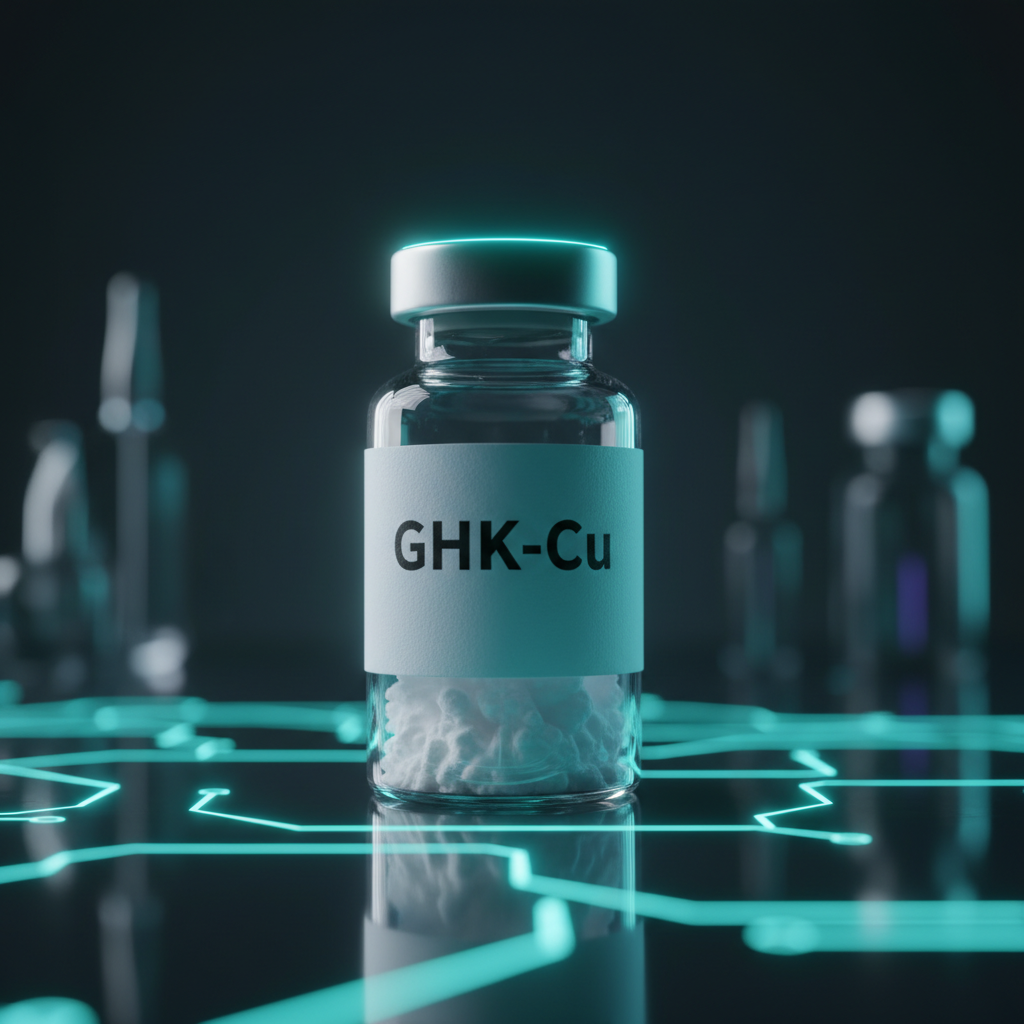
The featured peptide in demand. GHK-Cu is a naturally occurring tripeptide — glycyl-histidyl-lysine — complexed with copper (Cu2+), found in human plasma at roughly 200 ng/mL at age 20 and declining to about 80 ng/mL by age 60. It promotes collagen synthesis, upregulates antioxidant enzymes like superoxide dismutase and catalase, activates skin fibroblasts, and stimulates VEGF-driven angiogenesis. Gene expression analysis shows GHK-Cu modulates more than 4,000 human genes, upregulating tissue repair pathways while downregulating inflammation-associated genes. Its short plasma half-life of about 30 minutes makes it primarily a topical and cell-culture research compound, and Japanese longevity and dermatology research programs are among the most active users. Alongside GHK-Cu, Japanese researchers frequently source BPC-157 for tissue repair studies, epitalon for circadian and aging research, and semaglutide and tirzepatide for metabolic studies.
Where to buy in Japan. There are three main channels. University-linked suppliers — institutions like the University of Tokyo, Kyoto University, and RIKEN maintain relationships with analytical and chemical suppliers serving affiliated researchers through institutional purchase orders and batch traceability — offer the cleanest route for academic teams. Licensed pharmacies can supply registered products like semaglutide through a prescription pathway, at marked-up prices. Online suppliers with Japanese delivery are where most independent researchers land, with shipping times of 5-10 days from overseas warehouses, customs handling, and discreet packaging being the key differentiators.
The customs reality for online orders. Japan Customs applies strict screening to international parcels, and pharmaceutical-looking shipments receive particularly close attention. In practice, small orders of lyophilized research peptides in labeled vials typically pass through, but there are no guarantees — Japanese authorities enforce drug law firmly, and documentation quality is the single biggest factor in smooth clearance. Practical tips from experienced researchers: order from suppliers who label shipments accurately as research chemicals and include a research-use declaration; avoid bulk orders and spread risk across smaller shipments; use suppliers with a confirmed track record of Japanese deliveries; and factor in 10% consumption tax plus potential duties on orders above the de minimis threshold.
Quality standards — the real risk in Japan. Because enforcement is strict, the greater practical risk for Japanese researchers is receiving product that fails analytical verification and wasting a research cycle. Non-negotiable checks: a third-party Certificate of Analysis from an independent lab showing HPLC purity above 99%, mass spectrometry confirmation — GHK-Cu's free peptide runs at 340.38 g/mol — and the actual test date; batch tracing, with the COA referencing the specific batch number on your vial; and copper content verification for GHK-Cu, since the peptide's activity depends entirely on proper metal complexation.
Storage and cold chain. Lyophilized GHK-Cu should be stored at -20°C in a desiccated environment. Japan's humid summers and the long transit from overseas warehouses make cold-chain shipping essential — reputable suppliers ship with ice packs, insulated packaging, and moisture barriers. Japanese winters are cold enough to aid preservation, but freeze-thaw cycles during transit remain a risk, so temperature-stable packaging matters year-round.
Pricing in Japan (2026). Expect a Japan-specific premium over US domestic pricing, reflecting shipping and customs overhead. GHK-Cu runs JPY 5,000-11,000 per 50mg vial (versus $35-$75 in the US), BPC-157 runs JPY 7,000-10,000 per 5mg vial, semaglutide runs JPY 17,000-22,000 per 5mg vial, and tirzepatide runs JPY 25,000-29,000 per 10mg vial. Local pharmacy pricing for registered products runs 2-4 times these figures, and if a price looks dramatically lower than these ranges, it is almost certainly counterfeit or underdosed.
Best practices for Japanese researchers. Verify supplier credentials and request batch-specific COAs before ordering. Keep procurement records — documentation protects you if customs asks questions. Confirm the supplier ships to Japan, understands Japanese labeling requirements, and has a reshipment or replacement policy. And remember that peptides are for research purposes only — reconstitution, dosing, and administration guidance belongs in a clinical setting, not a sourcing forum.
Sourcing options. PeptidePlaza offers worldwide shipping including Japan, with discreet packaging and cryptocurrency payment options for researchers who prefer financial privacy. The vendor directory on PeptidePlaza.com also lists suppliers vetted for COA transparency, so you can compare options before committing to an order.
Japan's research standards are among the highest in the world, and with the right supplier, meticulous documentation, and realistic expectations about customs and pricing, sourcing research peptides in Japan is entirely feasible — just let the paperwork be as rigorous as the science.
Related Peptide Profiles
Explore the full compound profiles for the peptides discussed in this article.
Related Guides
Continue reading related research and sourcing guides.
Explore the Peptide Encyclopedia
Browse compound profiles, amino acid sequences, mechanisms of action, and our curated vendor directory.