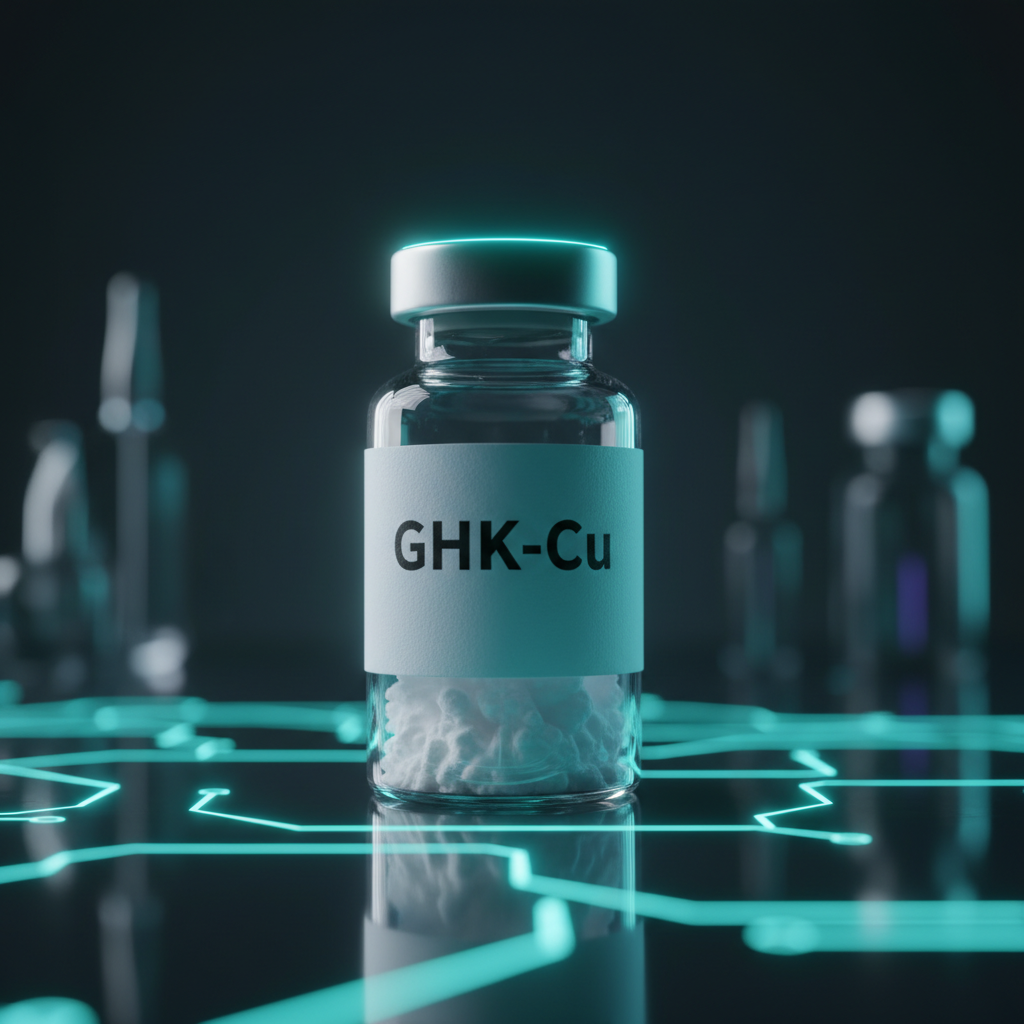
Where to Buy GHK-Cu in Thailand: Complete 2026 Guide
Where to buy GHK-Cu in Thailand in 2026: sourcing the copper peptide for collagen research, verifying >99% purity, storage best practices, and realistic Thai market pricing.
Dr. Erik Andersson
Medical Researcher
GHK-Cu has become one of the most widely ordered research peptides in Thailand, driven by the country's booming aesthetics and longevity sectors. The copper peptide's reputation for collagen research and tissue repair has made it a staple in laboratories from Bangkok to Phuket.
Thai research interest spans several fronts. Dermatology and cosmeceutical laboratories use GHK-Cu as a reference standard in collagen synthesis assays, regenerative medicine groups study its role in fibroblast activation and VEGF-driven angiogenesis, and longevity researchers track its antioxidant enzyme upregulation, particularly superoxide dismutase and catalase. Because the peptide is affordable and well characterized, it is often the first compound a new Thai lab validates its analytical methods with.
The compound itself is elegantly simple: a tripeptide of glycine, histidine, and lysine complexed with a copper ion. It occurs naturally in human plasma at about 200 ng/mL at age 20, declining to roughly 80 ng/mL by age 60, and gene expression studies show it modulates more than 4,000 genes, upregulating collagen, elastin, and antioxidant pathways while downregulating inflammatory ones. That breadth explains its central role in skin-aging, wound-healing, and regeneration research. The copper ion is the active partner, and without intact complexation the peptide loses most of its documented activity, which is why copper content verification matters as much as sequence purity.
Quality verification is the single biggest sourcing risk. Because GHK-Cu is cheap to produce, low-grade and counterfeit vials are common in the Thai market. Require a third-party Certificate of Analysis with HPLC purity above 99 percent, mass spectrometry confirmation of the 340.38 g/mol free-peptide mass, and documented copper content.
Storage is straightforward but unforgiving. Lyophilized GHK-Cu belongs at -20°C in a dry environment until reconstitution, and Thai humidity demands insulated, ice-packed shipping. Inspect vials on arrival and reject any with damaged seals or visible moisture. Vials that arrive warm after long transit should be flagged even with intact seals, because cumulative heat exposure degrades the copper complex over time.
Reconstitution deserves its own protocol. Use sterile bacteriostatic water, note the date and diluent on the vial, and keep the reconstituted solution refrigerated at 2-8°C. With a plasma half-life of around 30 minutes, GHK-Cu's utility in a study depends on preparation timing, so batch logs and handling records should be part of the standard operating procedure.
Keep documentation for every order: batch-specific COAs, material safety data sheets, storage logs, and supplier correspondence. In Thailand, where customs and institutional reviews both scrutinize imports, a complete paper trail is the cheapest insurance you can buy.
Sourcing channels are consistent nationwide. Aesthetics clinics in Bangkok, Pattaya, and Phuket sell GHK-Cu products at two to four times international research pricing. University-linked suppliers serve affiliated researchers with proper purchase orders and traceability. Independent researchers rely on online suppliers with three to seven day Thai delivery, comparing shipping track records and reshipment guarantees before committing. PeptidePlaza offers worldwide shipping including Thailand, with discreet packaging and cryptocurrency payment options for researchers who prefer financial privacy.
Expect to pay $40-$75 per 50mg vial for research-grade GHK-Cu from international suppliers, roughly THB 1,400-2,700 at mid-2026 rates, while clinic-sold equivalents commonly run four to six times higher. Anything dramatically cheaper than the international range is probably diluted, and anything dramatically more expensive is probably a clinic markup. Group buys with other laboratories are the most common way Thai researchers bring effective per-vial cost down without touching quality.
The legal framing is the same as for all research peptides in Thailand. The Thai FDA regulates medicines under the Drug Act B.E. 2510 (1967); registered products require prescriptions, while research-use labeled compounds occupy a separate practical space. Enforcement targets counterfeit pharmaceuticals and unlicensed clinics, and small labeled research shipments typically clear customs, though no outcome is guaranteed. Factor in 7 percent VAT and possible duties above the de minimis threshold.
Best practices for Thai researchers: verify supplier credentials, request batch-specific COAs, confirm cold-chain shipping and reshipment policy, and maintain procurement records. Check recent researcher reports before selecting a vendor, and validate a first order with your own analytical methods before scaling up. An initial analytical check also establishes a baseline that makes later batch-to-batch comparisons meaningful. GHK-Cu is for research use only, and clinical administration guidance belongs with licensed practitioners. With due diligence, Thailand is one of the most convenient places in Southeast Asia to source this peptide.
Related Peptide Profiles
Explore the full compound profiles for the peptides discussed in this article.
Related Guides
Continue reading related research and sourcing guides.
Explore the Peptide Encyclopedia
Browse compound profiles, amino acid sequences, mechanisms of action, and our curated vendor directory.