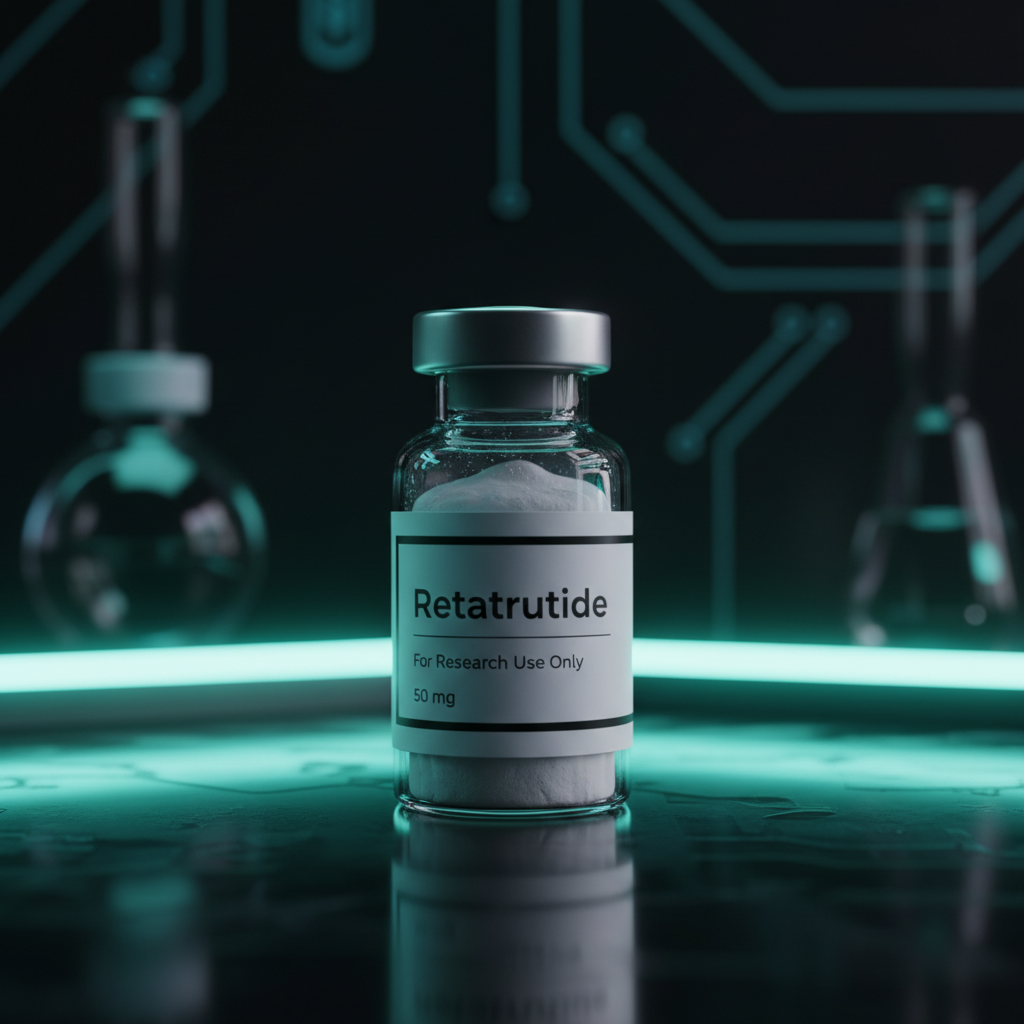
Where to Buy Retatrutide in Thailand: Complete 2026 Guide
Where to buy retatrutide in Thailand in 2026: supplier vetting, third-party COA checks, cold-chain logistics, pricing, and customs reality for the triple agonist researchers want most.
Dr. Rebecca Martinez
Medical Researcher
No research peptide has generated more excitement in Thailand in 2026 than retatrutide. The first unimolecular triple agonist targeting GLP-1, GIP, and glucagon receptors simultaneously, it posted the highest weight-reduction figures ever recorded in a clinical obesity trial, and Thai laboratories studying metabolic disease want in.
Demand is spread across the country rather than concentrated in one city. Bangkok's metabolic research centers and university hospitals account for the largest share, Chiang Mai's biomedical institutes order steadily, and private laboratories in Pattaya and Phuket serving wellness clients round out the market. Because retatrutide is not yet registered in Thailand as a pharmaceutical, every researcher in the country sources it through the research-use channel, which puts a premium on supplier reliability.
The data behind the demand is worth understanding. Phase 2 results published in the New England Journal of Medicine in 2023 showed up to 24.2 percent mean weight reduction at 48 weeks, while a companion Lancet study reported 22.8 kg of weight loss and a 2.02 percent HbA1c reduction at 24 weeks. The glucagon component drives energy expenditure through thermogenesis and hepatic fat mobilization, which is why the compound is also being researched for non-alcoholic fatty liver disease. With an estimated half-life of around 6 days, it also suits long-interval study designs, though that raises the stakes for accurate reconstitution and storage from day one. Liver fat resolution, reported in a majority of subjects in the Phase 2 obesity trial, has also made retatrutide a priority for Thai hepatology groups studying non-alcoholic fatty liver disease.
Sourcing retatrutide in Thailand starts with analytical verification. Request a third-party Certificate of Analysis with HPLC purity above 99 percent and mass spectrometry confirming the 4,731.33 g/mol molecular weight. The COA must reference the batch number on your vial; generic certificates without batch linkage are worthless. Serious buyers also ask for endotoxin testing results and a peptide content assay rather than settling for a chromatogram alone. A complete analytical package costs little more and removes most of the guesswork from vendor selection.
Cold chain is the second priority. Retatrutide has an estimated half-life of around 6 days and is supplied as a 10mg lyophilized vial that must be stored at -20°C until reconstitution. Thailand's tropical heat demands insulated packaging with ice packs, and reputable suppliers treat cold chain as standard, not an upgrade.
Documentation completes the sourcing triangle. Keep supplier credentials, batch-specific COAs, material safety data sheets, and storage records for every order. Thai institutions and customs reviews alike are easier to navigate with a complete paper trail.
Where researchers buy retatrutide in Thailand depends on affiliation. Registered GLP-1-class medicines are available through licensed clinics in Bangkok, Pattaya, and Phuket, but only via prescription pathways and at two to four times international research pricing. University-linked analytical suppliers serve affiliated researchers through purchase orders. Independent researchers overwhelmingly order online from suppliers with proven Thai delivery in three to seven days and reshipment guarantees. PeptidePlaza offers worldwide shipping including Thailand, with discreet packaging and cryptocurrency payment options for privacy-conscious researchers.
Pricing for research-grade retatrutide from established international suppliers runs approximately $120-$190 per 10mg vial, or THB 4,300-6,800 before shipping and VAT. Licensed clinics charge THB 15,000-40,000 or more for registered alternatives, and offers far below the international range are almost certainly counterfeit.
The regulatory context is consistent across Thailand. The Thai FDA administers the Drug Act B.E. 2510 (1967), and registered GLP-1 products are prescription medicines; research-use labeled peptides occupy a different practical space, with enforcement directed at clinical supply chains and counterfeits. Small labeled research shipments usually pass customs, but there are no guarantees. Expect 7 percent VAT and possible duties above the de minimis threshold, and declare shipments accurately.
Best practices for Thai researchers sourcing retatrutide: verify supplier credentials, request batch-specific COAs before ordering, confirm Thai delivery and reshipment policy, spread orders across smaller shipments, and keep procurement records. Monitor researcher forums and vendor directories for recent Thai delivery reports, since conditions change faster than supplier websites do. Comparing COA data across vendors for the same batch number is a quick way to spot document fabrication, a known problem in the region. Retatrutide is for research purposes only. Done properly, sourcing the most talked-about peptide in metabolic research is entirely feasible from Thailand.
Related Peptide Profiles
Explore the full compound profiles for the peptides discussed in this article.
Related Guides
Continue reading related research and sourcing guides.
Explore the Peptide Encyclopedia
Browse compound profiles, amino acid sequences, mechanisms of action, and our curated vendor directory.