TB-500 Research Guide: Thymosin Beta-4, Tissue Repair & What the Studies Show
A comprehensive look at TB-500 (Thymosin Beta-4) research — covering mechanism of action, actin regulation, wound healing studies, and quality considerations for researchers.
Research Writer
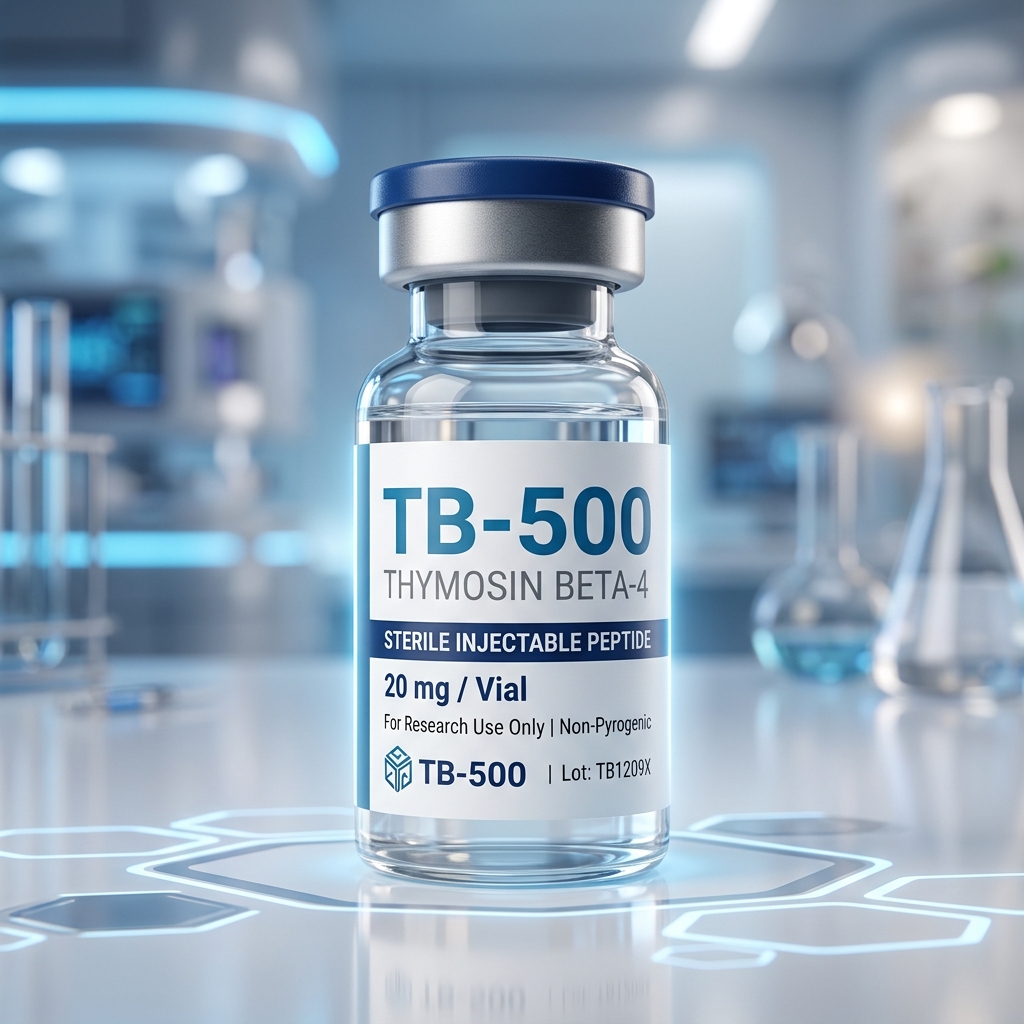
TB-500, the synthetic version of Thymosin Beta-4 (Tβ4), is one of the most studied recovery-related peptides in preclinical research. Found naturally in nearly every cell in the body, Thymosin Beta-4 plays a central role in actin dynamics, cell migration, and tissue homeostasis.
The peptide's core mechanism revolves around sequestering G-actin (globular actin), which regulates the actin cytoskeleton. By modulating the ratio of free to filamentous actin, TB-500 influences a cascade of downstream effects including cell motility, inflammation signalling, and angiogenesis.
Research into TB-500's wound-healing properties has been extensive. Studies in rodent models have documented accelerated closure of dermal wounds, corneal injuries, and cardiac tissue damage. A frequently cited mechanism is the upregulation of integrin α-v-β-3, which promotes cell migration into wound sites and speeds re-epithelialization.
Cardiovascular research has explored Thymosin Beta-4's role in cardiac repair following ischemic injury. Studies published in journals including Cardiovascular Research suggest the peptide promotes cardiomyocyte survival, reduces apoptosis, and may stimulate dormant cardiac progenitor cells — an area of intense interest in regenerative cardiology.
Anti-inflammatory properties are another active area of inquiry. TB-500 appears to modulate NF-κB signalling and reduce pro-inflammatory cytokine production in multiple tissue types. This dual action — simultaneously promoting repair while reducing inflammation — makes it a uniquely interesting research target.
Musculoskeletal research has examined TB-500's effects on tendon, ligament, and muscle repair. Animal studies show improved collagen organization in healing tendons, enhanced satellite cell activation in muscle injury models, and accelerated return of mechanical strength. Researchers typically use standardised injury protocols to measure these effects objectively.
Neurological research is an emerging frontier. Early-stage studies suggest TB-500 may cross the blood-brain barrier and exert neuroprotective effects in models of traumatic brain injury and stroke, possibly via VEGF upregulation and reduced neuroinflammation.
For researchers sourcing TB-500, purity is paramount. The correct sequence — Ac-LKKTETQ — must be verified by mass spectrometry. HPLC should confirm purity above 99%. Impurities in actin-modulating peptides can produce confounding results, particularly in migration and cytoskeletal assays.
Storage considerations: lyophilized TB-500 is stable at -20°C for extended periods. Once reconstituted in bacteriostatic water, refrigerate at 2–8°C and use within 30 days. Light exposure should be minimised throughout.
Dosing in animal studies varies widely (typically 1–10 mg/kg depending on model and endpoint), which makes direct comparisons across the literature challenging. Researchers should design protocols with appropriate controls and multiple time-point assessments to capture the full temporal profile of TB-500's effects.
As one of the most consistently reproduced peptides in regenerative research, TB-500 continues to attract significant scientific interest. Its multi-system effects and favourable safety profile in preclinical models make it a compelling subject for researchers working at the intersection of tissue engineering, sports medicine, and regenerative biology.
Related compound profiles
Full compound profiles for the peptides discussed in this article.
Related guides
Continue with related research guides.
Research tools
129 compound profiles — sequences, mechanisms and cited studies.
Browse the Peptide Encyclopedia →