Selank & Semax: Russian Nootropic Peptides and the Neuroscience Behind Them
Selank and Semax emerged from Soviet-era neuropharmacology research and have since built a meaningful scientific literature. Here is what the evidence actually shows about their anxiolytic and cognitive mechanisms.
Research Writer
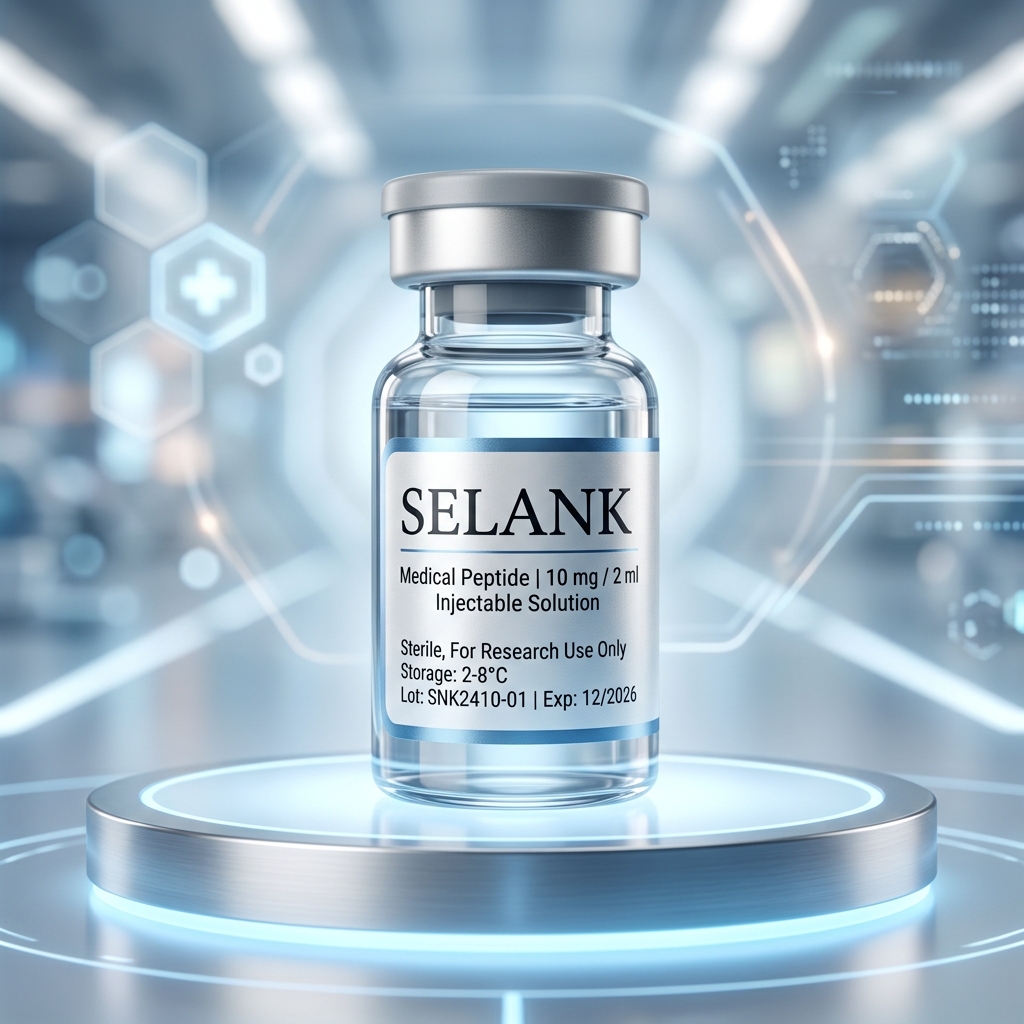
Selank and Semax are two nootropic peptides that emerged from decades of neuropharmacology research in the Soviet Union and post-Soviet Russia. While less known in Western research circles than GLP-1 analogs or recovery peptides, they have a substantive published literature — much of it in Russian-language journals — covering anxiolytic, antidepressant, and cognitive-enhancing mechanisms.
Selank (Thr-Lys-Pro-Arg-Pro-Gly-Pro) is a synthetic heptapeptide analog of the endogenous immunopeptide tuftsin. The tuftsin connection is mechanistically important: tuftsin (Thr-Lys-Pro-Arg) mediates immune-nervous system crosstalk, and the Pro-Gly-Pro extension in Selank enhances its stability and CNS penetration. Selank's primary mechanism involves modulation of the GABA-A receptor complex and normalisation of serotonin and dopamine metabolism in the limbic system — a profile consistent with its documented anxiolytic effects in animal models.
Unlike benzodiazepines, Selank's anxiolytic effects in animal studies are not accompanied by sedation, muscle relaxation, or withdrawal behaviour in standard preclinical tests. This selectivity has driven significant interest as a potential tool for studying anxiety neurobiology without the confounds of classical anxiolytics.
Cytokine research adds another dimension to Selank's profile. Studies show it modulates IL-6 production and influences T-helper cell differentiation, suggesting a neuroimmunological mechanism — consistent with its tuftsin ancestry. The bidirectional relationship between stress, immunity, and brain function makes Selank an interesting subject for psychoneuroimmunology research.
Semax (Met-Glu-His-Phe-Pro-Gly-Pro) is an analog of ACTH (adrenocorticotropic hormone), specifically a fragment corresponding to the 4–7 residues of ACTH with a C-terminal Pro-Gly-Pro stabiliser. It was developed as a neuroprotective agent and has been registered as a drug in Russia for cognitive impairment following stroke and traumatic brain injury.
Semax's mechanism centres on BDNF (brain-derived neurotrophic factor) upregulation and melanocortin receptor activation (specifically MC4R in the brain). BDNF promotion is one of the most reproduced effects in the Semax literature — intranasal administration in rodents reliably increases hippocampal BDNF expression, with associated improvements in learning and memory tasks. This makes it a particularly relevant tool for studying neuroplasticity and hippocampal-dependent memory formation.
Neuroprotective research has examined Semax in ischemia models. Studies document reduced infarct volume, improved neurological scores, and faster functional recovery in rodent stroke models. The proposed mechanism involves both anti-apoptotic signalling downstream of BDNF and modulation of inflammatory gene expression via melanocortin receptors.
Methodological notes for researchers: Both peptides are relatively small and require intranasal or parenteral administration — oral bioavailability is poor due to rapid peptidase degradation. Intranasal delivery bypasses the blood-brain barrier issue and is the route used in most clinical-context studies. Researchers should use validated delivery volumes and concentrations when adapting animal model data.
Analytical verification for both peptides should include mass spectrometry for molecular weight confirmation and HPLC for purity. Both are heptapeptides (MW ~600–800 Da) with relatively simple analytical profiles, but sequence verification is still essential given the existence of structurally similar peptide fragments in this class.
For Western researchers looking to expand their nootropic peptide toolkit, Selank and Semax offer a well-defined but underexplored literature base, clear mechanistic hypotheses, and genuine translational potential based on their human use history in Russia.
Related compound profiles
Full compound profiles for the peptides discussed in this article.
Related guides
Continue with related research guides.
Research tools
129 compound profiles — sequences, mechanisms and cited studies.
Browse the Peptide Encyclopedia →